What We Do
The Campus Engineering team oversees maintenance, repairs, and recommissioning of areas that have been identified as critical facilities. This team ensures that the building systems operate to maintain a safe and reliable work environment for our faculty, staff, and students.
They manage campus utilities and energy use through the Euclid Power Plant, serving multiple connected buildings. Campus Engineering reduces costs through planning support programs, energy conservation, and sustainability initiatives.

Control Room
The Control Room monitors over 600,000 building automation points across 52 buildings.
This work happens 24 hours a day, 7 days a week, 365 days a year.

Critical Facilities
The Critical Facilities Team supports renewal planning and management. They provide technical oversight for design and construction projects, and the recommissioning of the critical facilities.
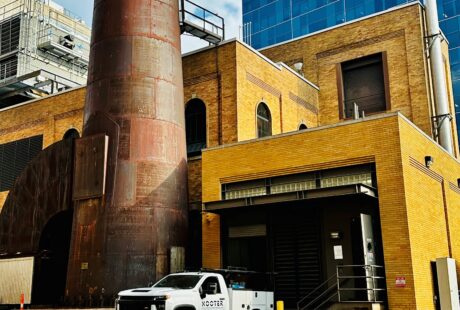
Euclid Power Plant
The Euclid Power Plant provides steam (process & heating), chilled water, and domestic hot water to multiple campus buildings.
This team supports plant operations 24 hours a day, seven days a week, 365 days a year.
Energy and Infrastructure
The National Fire Protection Association (NFPA) created specific approach boundaries to protect employees working on or near energized equipment. Facilities Engineering ensures strict adherence to safety guidelines and procedures to prevent employee injury or death.
The Arc Flash Prevention Program incorporated the NFPA approach and protection boundaries in compliance with Occupational Safety and Health Administration (OSHA) and National Electrical Code requirements.
WashU Medicine has created a program to remodel or modernize each elevator every 25 years to meet current elevator code and to increase the reliability and improve the aesthetics of the aging elevators.
WashU Medicine has a contract with KONE Elevators & Escalators of St. Louis to provide three elevator mechanics on staff to respond to elevator breakdowns, perform preventive maintenance, and work with the state inspector on the 1 and 5-year inspections and testing cycles.
In partnership with EH&S and to comply with the Missouri Department of Natural Resources, the Euclid Power Plant maintains a yearly test and calibration program on the natural gas and fuel oil systems for the steam boilers. This process ensures a safe and reliable steam supply for the campus.
Effective in 2017, the Building Energy Awareness Ordinance requires large building owners, buildings over 50,000 square feet, to track and report annual energy and water usage.
The department tracks monthly energy and water usage with the ENERGY STAR Portfolio Manager software.
We identify trends toward higher energy consumption through routine checks of the energy meter advanced reporting. The anomalies are escalated to the Controls Group and Facilities Maintenance Teams to perform troubleshooting and resolution.
Utilities

Natural Gas Hedging Committee
The Facilities Engineering team plays an active role in helping ensure that WashU Medicine’s energy budget remains stable despite fluctuations in the commodities market.
Spot Market Purchasing
Each month, we estimate and purchase natural gas at market pricing.

Limited Use Tracking
Should the need arise, the boilers in the Euclid Power Plant are capable of burning both natural gas and fuel oil as needed.
Technology Program Enhancements
Campus Engineering makes use of cutting-edge technologies to improve customer service and collaboration while reducing operating costs.
The Utility Data Tracking Program provides monthly and annual energy cost and consumption data for the WashU Medicine Annual Energy Review, utility budgeting, emissions tracking, and operating expense recovery from partner organizations, such as BJC, where they are leasing space. Monthly utility usage and cost are tracked and monitored for electric, natural gas, water, and sewer.
Campus submetering is essential for tracking energy use and recovering costs from partner organizations and research funding institutions. The metering system consists of electrical, chilled water, hot water, natural gas, and steam meters installed on campus.
Sustainability Program
WashU Medicine recognizes the importance of environmental stewardship and is committed to reducing the campus’s environmental footprint. The OFMD’s teams drive sustainability through energy conservation initiatives, efficient utility management, and continuous improvement efforts. WashU Medicine supports the university’s long-term ecological and financial health goals by aligning our operations with sustainable practices.